
Page under construction; incomplete. Please forgive any mistakes. This is merely a sketch of the future page.
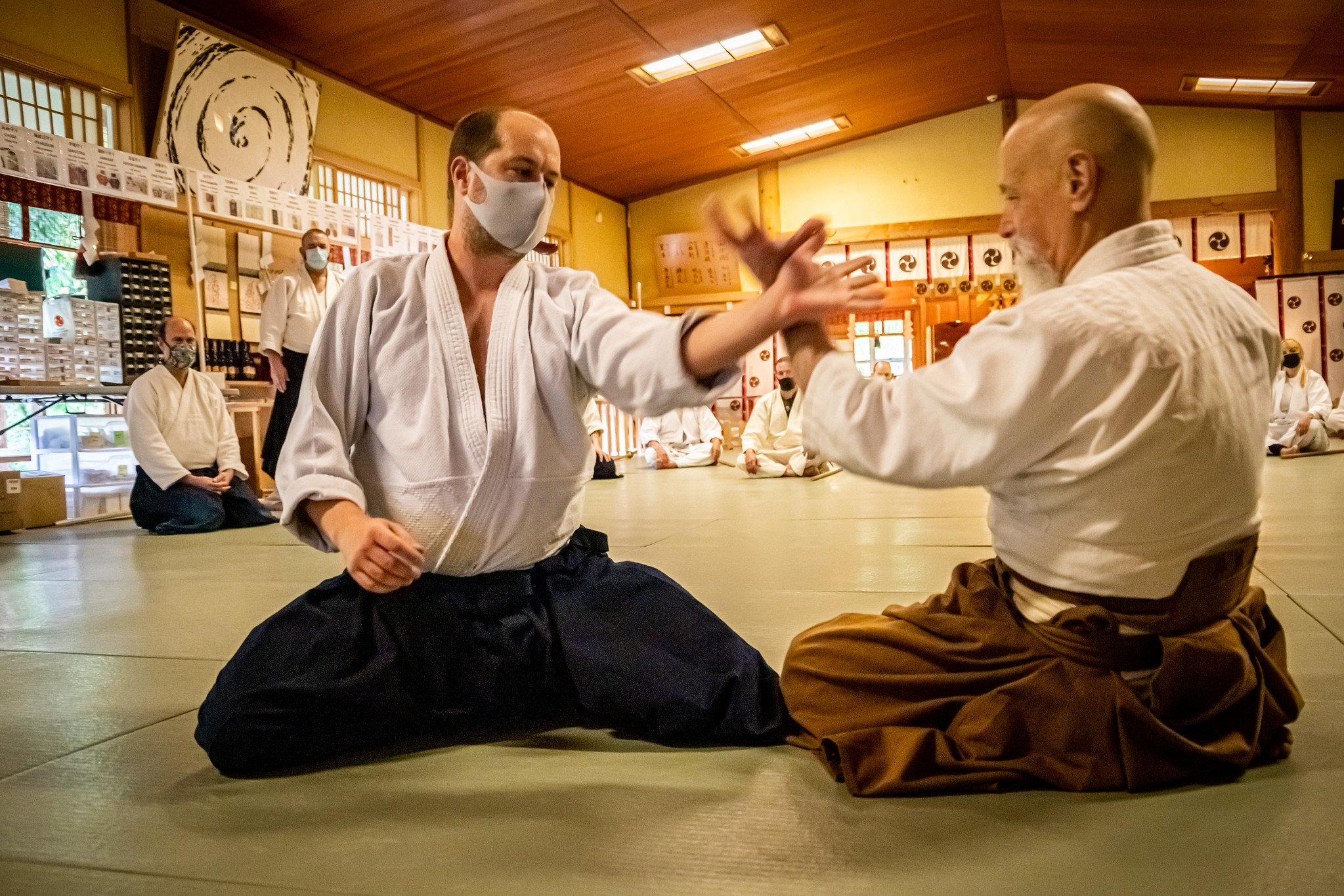
Highlands Kannagara Aikido is a training group of the style of Aikido established by Rev. Barrish Sensei, of Kissimmee, FL. as practiced and shared by Matthew Gano, who began training with Barrish Sensei in 1998. At present we have no fixed location for training.
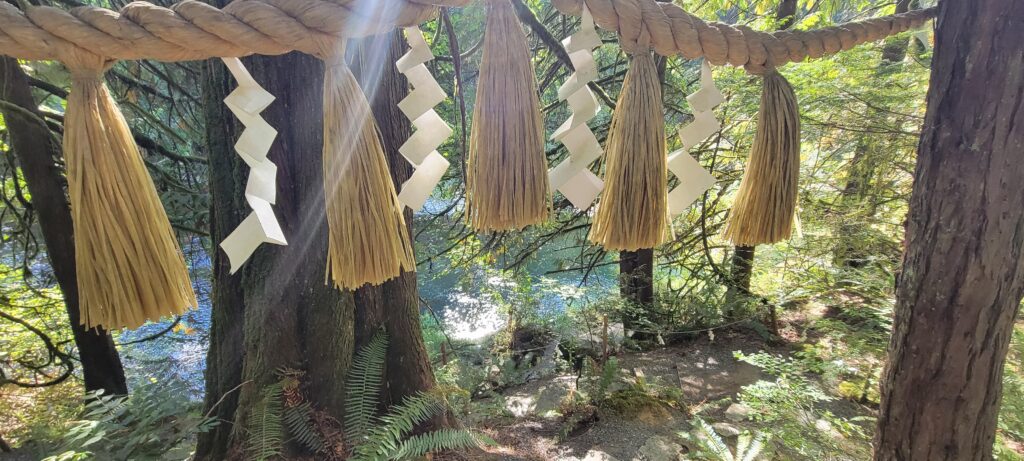
Kannagara can be described as the restless infinite flow of divine nature. It represents the continuous growth and development that naturally comes with diligent study and sincerity of practice. By generating deep consideration and intensity of focus we can develop our perception, generating greater intuition and meaningful connection with the world around us and within us.
People Train for many different reasons and there’s room for everyone to pursue their goals together. Issho ni gambaremasuyo! Let’s do our best together!
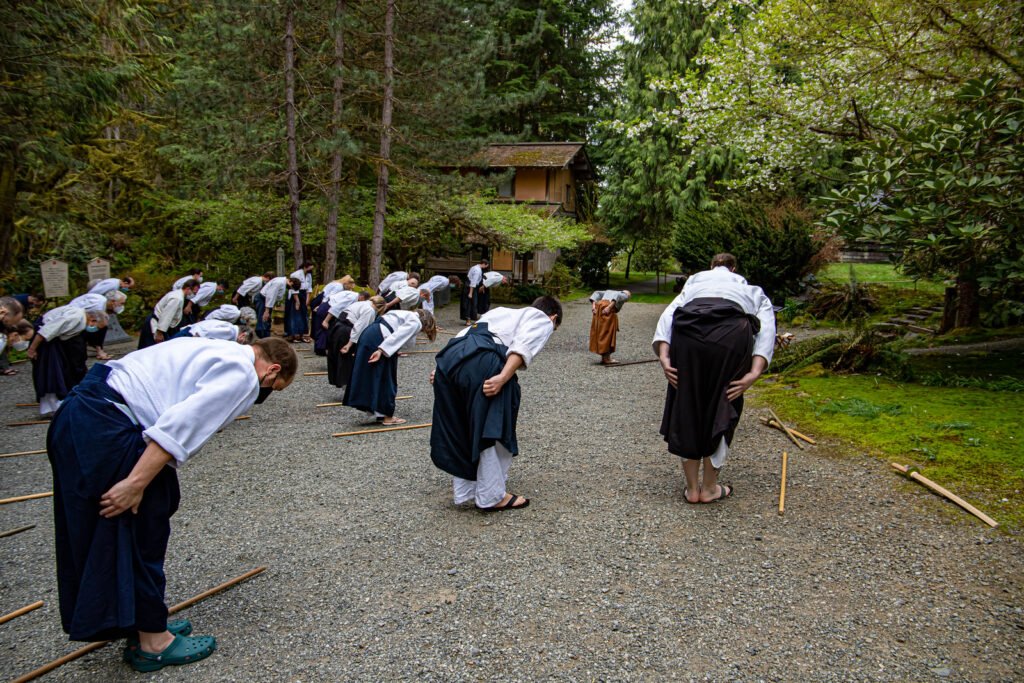
Many folks like to think of personal development in terms of the body, mind, and spirit…
Physical Practice
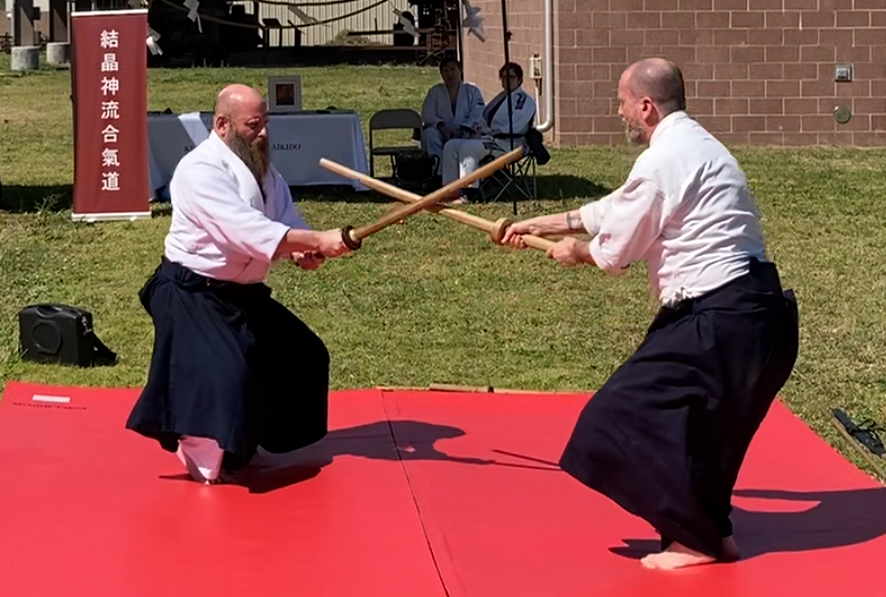
Ideally, a person trains as much of their whole self as they can muster.
As we train our awareness of the physical structure and strive toward learning how to move with balance in any direction at any time, we can radically improve our body’s natural resilience and strength. The spiralic winding and unwinding of the limbs and trunk of the body can strengthen and help revitalize our joints and easily help heal low-level chronic pain. It strengthens the connections within us to facilitate greater resilience and power with which to do the physical work we seek to accomplish.
Techniques are merely a reference point for exploring different ways the body can move. They provide a recognizable form through which we can readily refine how we might engage the body in that movement. Ultimately, techniques are incidental to the study of developing an “aiki body,” a body which has been developed to manage incoming forces while generating stable whole-body power.
Aikido can be practiced in a wide variety of ways from a vigorous and athletic manner to a soft and meditative manner. It can be applied to self-defense, but at its core, aikido is a way of developing the self; and its physical expression, when practiced carefully, happens to build a stronger, healthier, more resilient body…again, with balance and stability.
Mental Practice
At the heart of learning anything is the ability to discern. We can become familiar with a technique to the point where we can practically do it in our sleep, but unless we’re developing our ability to notice new things, to gather up new parts of the body into a more cohesive and refined whole, we’re literally just going through the motions. That can be great exercise and shouldn’t be taken for granted. However, the way we apply our perceptions, our senses and mind, subtly and profoundly affects how we can train our body.
Discipline, awareness (in both the micro and macro sense), fortitude, clarity, and even joyousness, are all part of the myriad aspects of the mind which can be developed in training, and which help further develop our practice in training.
Stepping into the training space is a signal to the mind that we’re in a place to apply ourselves more completely than we might in a more casual setting…to kick it up a notch. It’s a time for cultivating a balance between general awareness and focused awareness, and over time, ideally, we bring that with us into our day-to-day lives. How much bandwidth or power we create for our minds depends on how we apply our mind to our physical practices.
Spiritual Practice
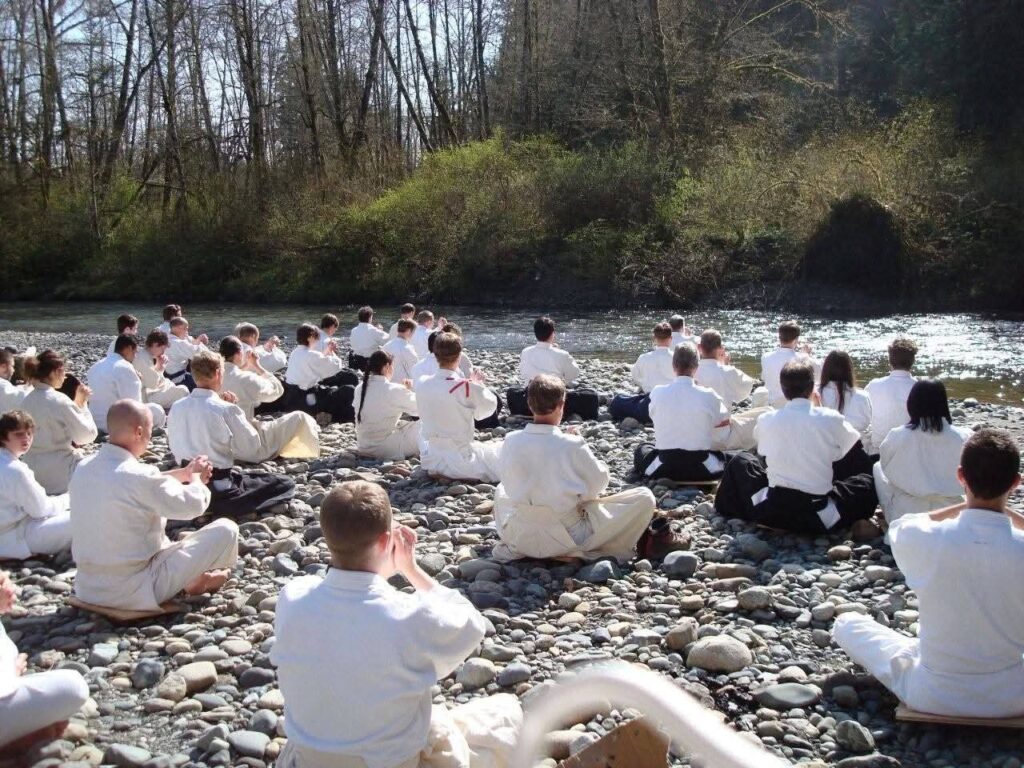
There are many different ideas about what constitutes a spiritual practice. It’s something that can be hard to describe clearly, and it might even be different for each person within groups that describe it in the same ways.
The Highlands Kannagara Aikido spiritual practice itself consists simply of a quiet period of time before and after training where you can choose to connect with your core values; to listen to your heart and focus on your goals to carry forward in the spirit of self-improvement, mutual consideration, and community engagement.
That said, one application of the spiritual principle to consider might be the idea that at any given moment we are engaged in training. Our bodies and minds adapt automatically to whatever we do. For example, if we spend a lot of time watching TV, reading about history, or yelling at people in traffic, our bodies and minds respond to that activity, reinforcing those kinds of interactions. The foundational nature of how we engage any given thing shapes who we are in some way, shaping our potential in different ways, and it unfolds through time like everything else.
In short, we’re constantly evolving and the cumulation of ourselves in a given moment might be described as a kind of spiritual effect.
Kannagara Inari Jinja is the Shinto shrine we are connected with. The practices of Shinto might be generalized loosely as connecting with Great Nature, cultivating gratitude for the wonderful things in this remarkable existence, and doing our utmost to purify ourselves so we can remove obstructions, come correct, and bring forward the very best we have to offer into the world around us.
Formal Shrine Shinto meditation and ceremonies are ancient and beautiful practices anyone can participate in to express gratitude and pray for their heart’s wishes, regardless of religious beliefs.
The late Rev. Dr. Yamamoto Yukitaka, 96th generation head priest of Tsubaki Grand Shrine in Mie-ken, Japan, described “Kami” as, “…any divine being or anything in the world or beyond that can inspire in human beings a sense of divinity and mystery,” (Kami No Michi). Please feel free to reach out to Kannagara Inari Jinja to learn more.